Before Drum & Bass Had A Name: Nigel Broad’s Journey Through The UK Underground

Five releases trace Nigel Broad’s path from late-’80s house to the breakbeat pressure of the early ’90s—a period when British dance music was changing faster than anyone could name it.

Nigel Broad lived through that acceleration from inside the studio. Raised in Upminster, Essex, Broad’s musical life began before rave entered the national imagination as he was already playing keyboards with the band Special Guests in Brentwood by 1985. Within a few years, however, his attention had shifted toward electronic production and the widening possibilities of club music. The keyboard player had become a producer just as the studio itself was turning into a new kind of instrument.
Across two projects—State Of The Rhythm with Darren Cooper and Rhythm Junior with Vince Mitchell—five of his releases preserve the sound of the UK underground changing in real time. Heard chronologically, they feel less like separate records than successive frames from the same piece of film.
1989: Let the Dancefloor Decide
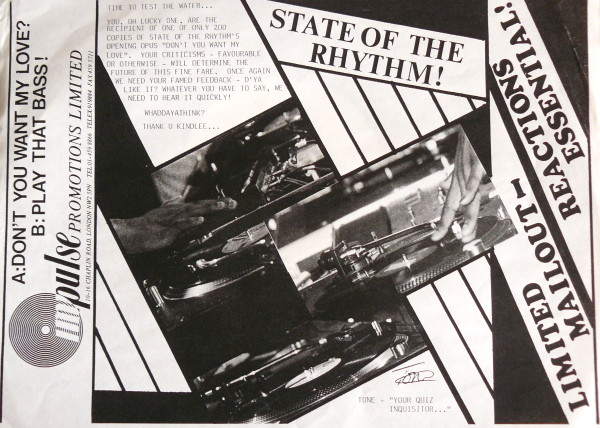
The story opens with Don’t You Want My Love / Play That Bass, a stamped promotional white label by State Of The Rhythm.
Both sides retain house music’s emotional directness and bass-driven economy. “Don’t You Want My Love” loops a sensual vocal until it becomes part of the atmosphere, while “Play That Bass” turns toward the funkier, more commanding side of the dancefloor. There is no elaborate concept to decode. The record is built to enter a room, find its place in a set, and work.
Its white-label format was part of that function. These records could move from pressing plant to DJ bag with little artwork, biography, or promotional machinery attached. A track might be tested at a club, passed between selectors, and acquire a reputation before most listeners knew who had made it. Anonymity was not an obstacle; it left the verdict to the dancefloor.
1990: House Begins to Come Apart
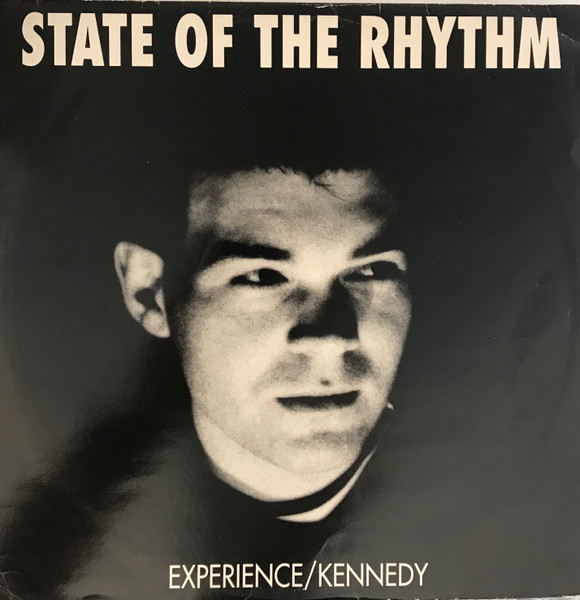
The record remains grounded in house, but the edges are less stable. Sampling, atmosphere, and a sharper electronic sensibility point toward something stranger. “Kennedy” is the clearest example, setting material connected to John F. Kennedy and his assassination against supple grooves. The contrast gives the track its peculiar charge: inviting enough to move a floor, uneasy enough to disturb it.
That friction mirrored the scene around it. Imported house and techno were no longer being treated as fixed templates. In British clubs, free parties, and radio broadcasts, producers were taking those forms apart and rebuilding them with local materials. Genre had become a temporary arrangement.
1991: The break Takes Over
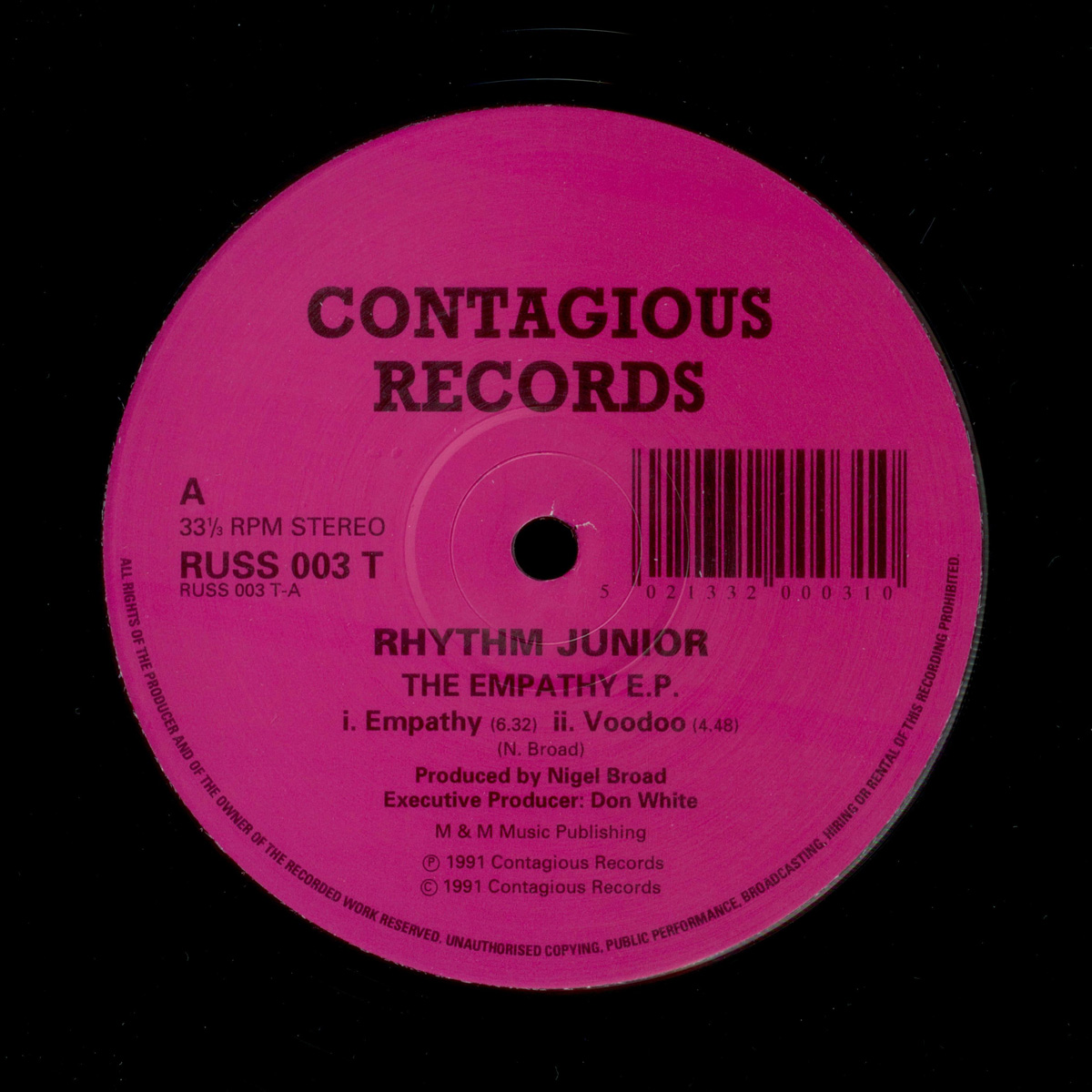
The music occupies the same unsettled territory. Breakbeats hit with new force, but house atmosphere remains in the frame. One moment is direct and physical; the next seems to drift above the drums. That coexistence was central to early British hardcore, which could be aggressive without surrendering euphoria and experimental without losing sight of the crowd.
Later histories would separate these sounds into cleaner categories. The Empathy E.P. comes from a moment when they still shared the same room.
1992: Into Overdrive
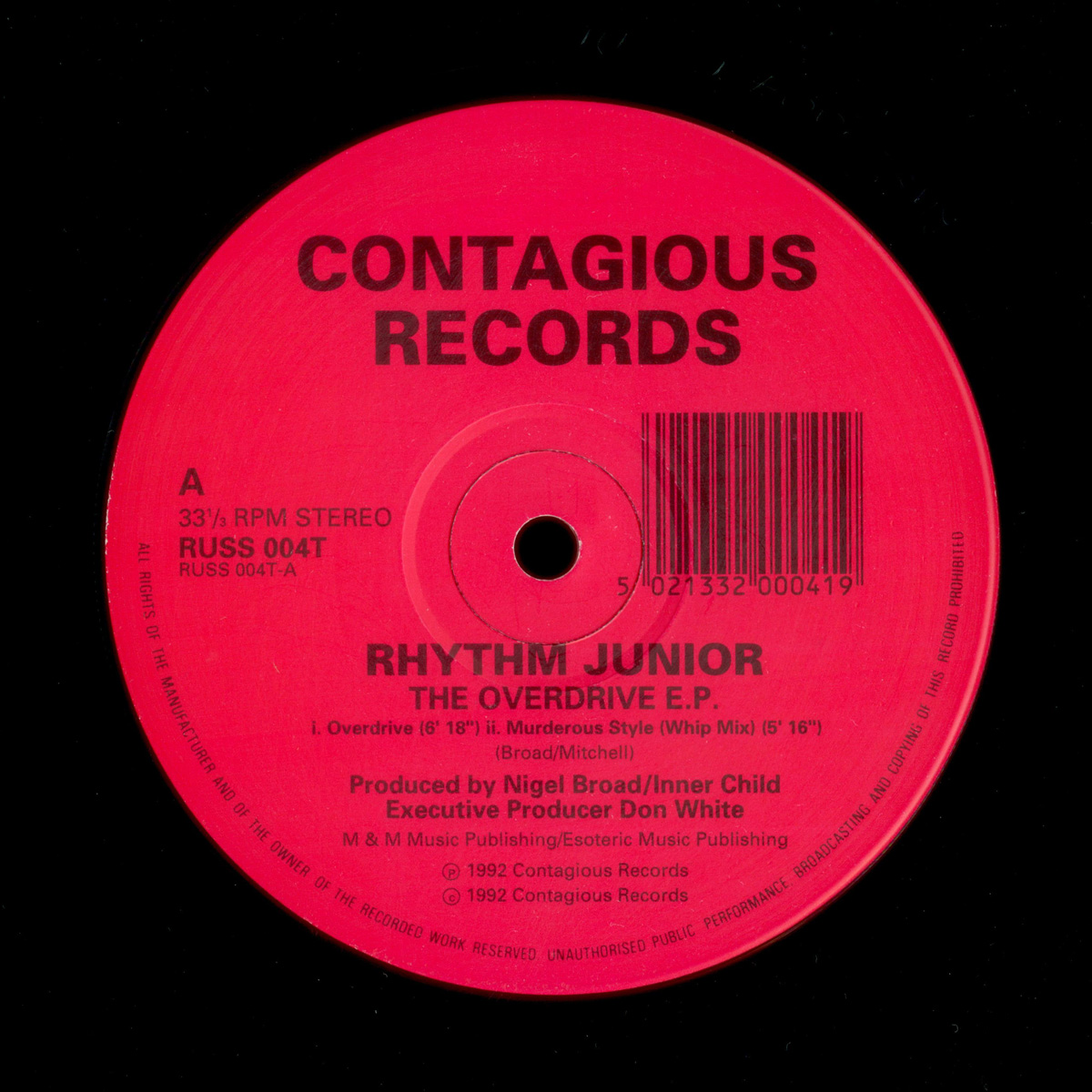
The Overdrive EP belongs to that threshold. Its outsized synthesizer riffs and tightening opening patterns carry the force suggested by the title, yet the record does not abandon warmth. Softer house melodies remain threaded through the breakbeat impact. The future arrives without completely erasing the recent past.
This was also one of Broad’s most productive periods. Working with DJ Rush Puppie as Release, he issued “Dance In Eden” and “Passion,” followed by The Spirit Of Space EP. Those records became some of his best-known contributions to the early-hardcore and proto-jungle continuum. Around the same period, he also contributed production and writing to Origin Unknown’s Eastern Promise EP, placing his work within another important branch of the emerging sound.
1993: Deep, Dark, and Still in Motion
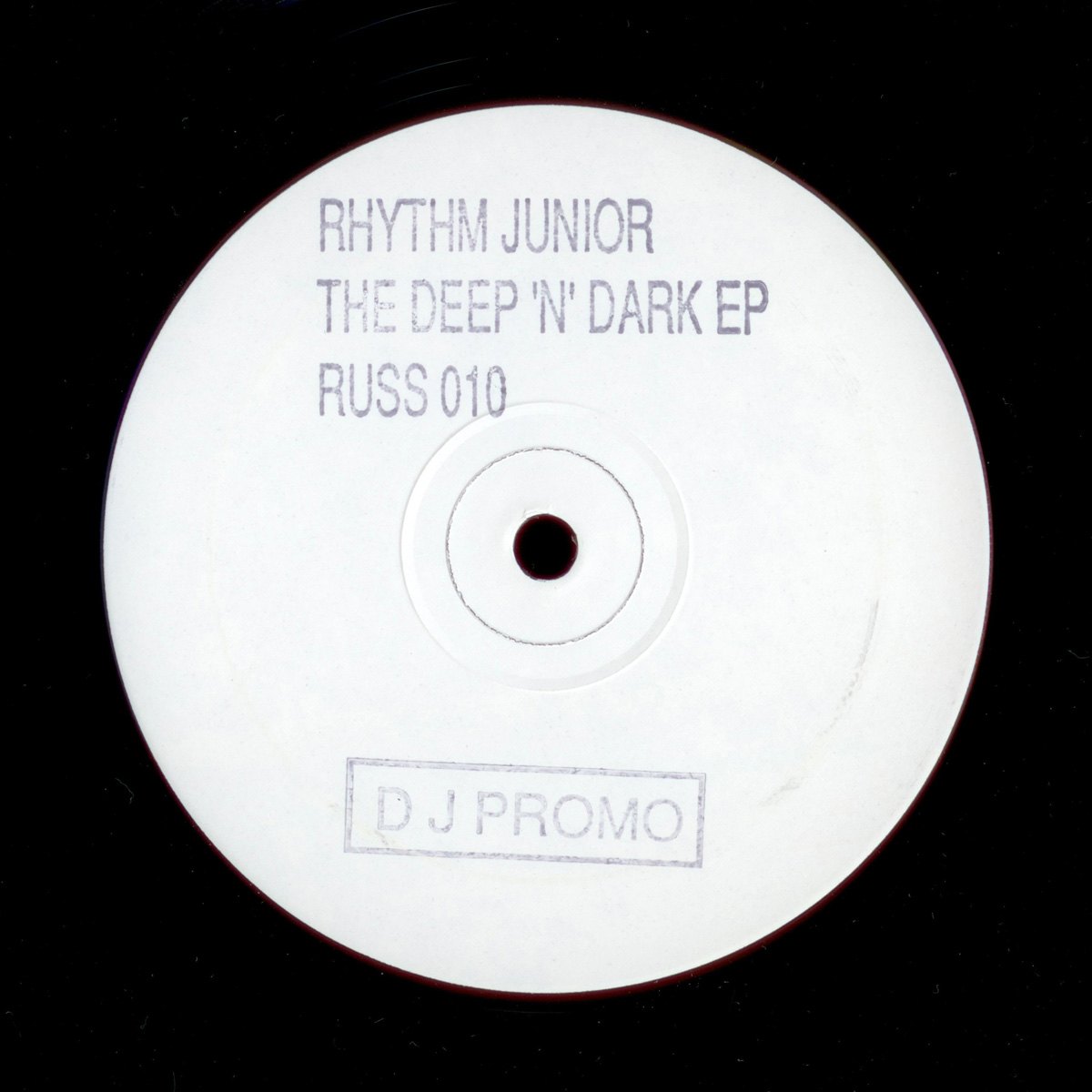
The record draws darkness, intimacy, escape, and collective release into the same space. Breakbeat structures and basslines have become more intricate, yet the music still carries traces of house and hardcore. It is precisely this ambiguity that gives the EP its power. Rather than presenting a genre in finished form, it catches several possible futures pressing against one another.
Broad’s work elsewhere in 1993 followed the same direction. As Aeon Flux, he released “Reality” and “Unconscious Thoughts.” With Release, he issued “The Jungle” and “Musical Movements.” The movement traced across the five Revibed titles had reached its clearest expression, but it had not settled. The music was still becoming itself.
***
It is tempting to turn British dance history into a clean sequence: house became hardcore, hardcore became jungle, and jungle became drum & bass. These records resist that order. House grooves remain inside the breakbeats. Ambient passages share space with aggressive synth riffs. Disco, funk, dub, and American club music continue to surface inside tracks once marketed as futuristic. Broad moved between aliases and collaborators because the underground itself had multiple centers of gravity.
Broad's career continued well beyond that early rush of change. After moving to the United States, he expanded into music for television and film. In 1999, he composed the De Wolfe production-music album Hard Beats with Scott Kluesner, carrying his feel for propulsive rhythm into a different professional setting. He also built a parallel career in visual effects before turning his technical knowledge toward education, creating courses on drum & bass, dubstep, synthesis, sampling, Logic Pro, Korg Gadget, and hardware trackers.
His wider background gives these early records a different perspective. They are not isolated artefacts from a brief subculture, but the foundations of a creative practice built around rhythm, technology, atmosphere and motion.
Related Articles