Between Boggie and R&B: Street Soul, Modern Soul and City Lights

Street soul makes the most sense not as a sealed genre, but as a hinge. It sits at the point where Brit-funk and rare groove begin to turn inward, where boogie’s electronic glide meets a more intimate kind of songwriting, and where the path toward later contemporary R&B starts to come into view. It is soul music, but city-shaped. Softened by the night, sharpened by local scenes, and built from the feeling that romance and rhythm do not need to compete for space.
By the late 1980s in the UK, that feeling had found its own language. Street soul grew out of clubs, blues parties, pirate radio and small independent labels rather than the center of the industry, which is part of why it still carries that special combination of polish and privacy. The music was often economical in its construction but rich in atmosphere: drum machines with swing, reggae-shaped basslines, synth lines that felt futuristic without becoming cold, and vocals that stayed close to the listener even when the groove was built for movement.
The bridge back to Brit-funk matters here. Before street soul fully arrived, British artists had already been reworking soul, jazz-funk and disco into something more local and self-defining, with records at the end of the 1970s helping establish a specifically British dance-floor vocabulary. Street soul did not reject that world, but rather kept the sophistication, the bass consciousness and the sense of style, but traded some of the extroversion for closeness. If Brit-funk felt like the room in motion, street soul often felt like the hour after, when the lights dim but the energy stays in the air.
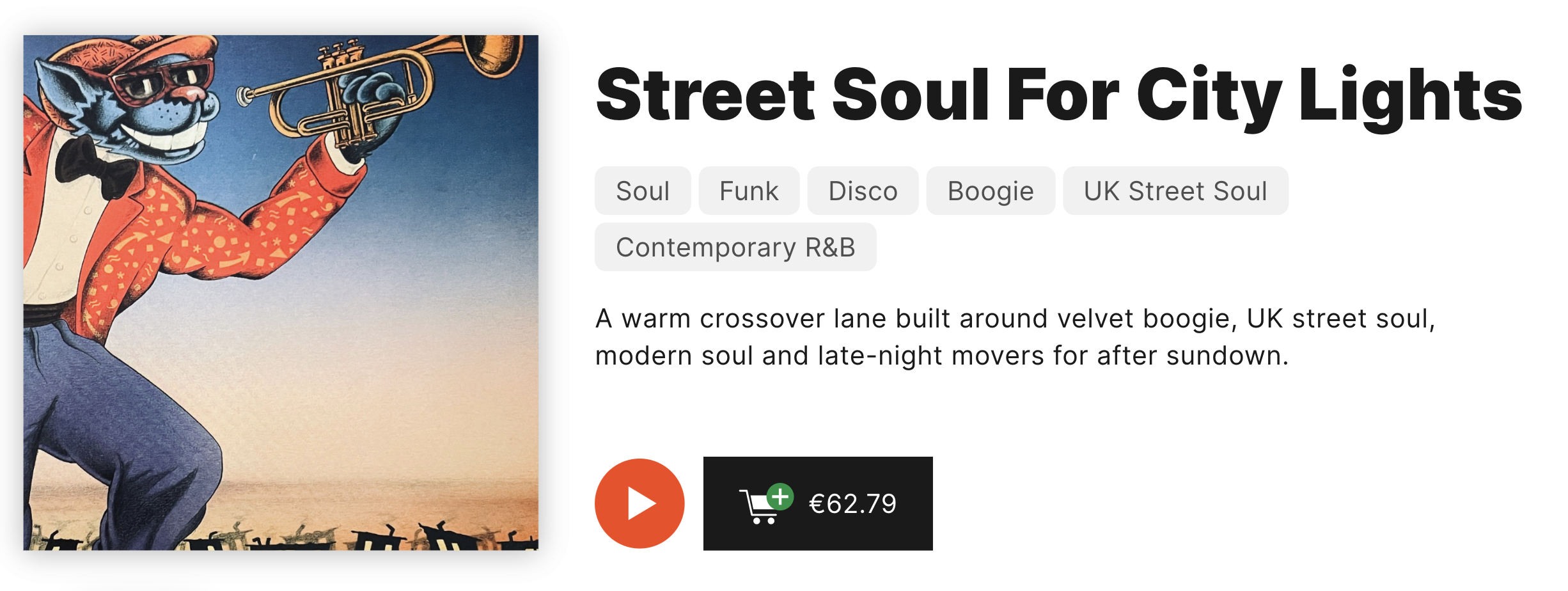
Boogie folds naturally into this picture. By then, funk and soul had already been reshaped by post-disco electronics: cleaner drum programming, richer synthesizer textures, and a smoother, more sensual kind of propulsion. Street soul absorbed that sheen without becoming anonymous. It borrowed the machine-assisted glide of boogie, but grounded it in Black British social life and in the soundsystem logic that gave weight and warmth to the low end. That is why records often feel both homemade and immaculate at once: they are electronic, but never detached from touch.
Just as important is the way this music opened room for a distinctly Black British voice. The shift was not only sonic, but cultural. It was a move toward soul music that did not have to disguise its local character or flatten itself into imported models. That is part of what makes the passage from street soul into modern soul and later contemporary R&B feel so fluid. The production becomes glossier, the market changes, the edges move, but the underlying values remain familiar. The intimacy, elegance, bass pressure, emotional directness, and grooves where designed to linger rather than shout. That continuity is less a strict genealogy than a way of listening, but once heard, it becomes hard to miss.
What endures, then, is not simply a genre name. It is a set of relationships: between soul and club music, between local identity and global influence, between tenderness and rhythm, between the dance floor and the walk home. Street soul matters because it held all of that together. It made room for softness without losing pulse, and for sophistication without losing feeling. In that sense, its real legacy is not just the records it produced, but the bridge it built––from boogie to modern soul, from rare groove to contemporary R&B, from collective movement to private emotion, all under the same city lights.
References
Related Articles