Strange Instruments That Heard the Future
Long before the synthesizer became a studio fixture, inventors were coaxing music from spinning glass, industrial dynamos, radio waves, and pulses of light.
Music history is often told through the instruments that stayed: the piano settling into the parlor, the electric guitar commandeering the stage, the synthesizer shrinking into a laptop plug-in. But the road to modern sound is littered with magnificent wrong turns—machines too delicate, enormous, expensive, or strange to become ordinary.
These four instruments form an unlikely family tree. Each begins with a familiar human desire—to sustain a note, enlarge an orchestra, make electricity sing, or play an impossible rhythm—and answers it with something that seems to have slipped in from another timeline.
The Glass Armonica
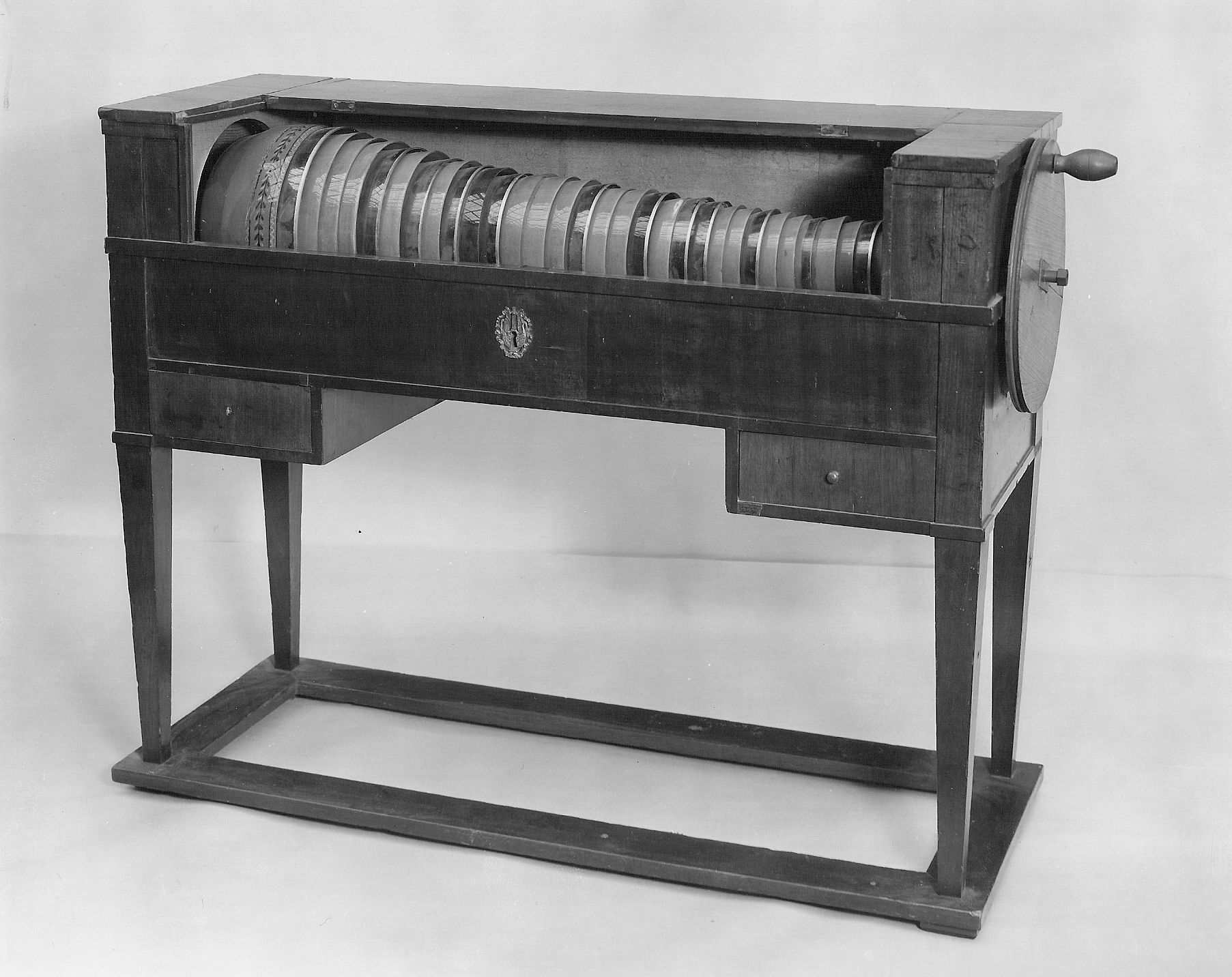
Benjamin Franklin encountered musical glasses in London: goblets tuned with water and sounded by running a damp finger around their rims. By 1761, his elegant redesign nested differently sized glass bowls along a horizontal spindle. A foot treadle kept the translucent stack turning, leaving both hands free to touch several rims at once.
Because the bowls were tuned by size and thickness, no water was needed; Franklin had turned a parlor trick into a chord-capable keyboard.
The armonica does not sound quite real. Its notes bloom without an obvious attack, hovering somewhere between a flute, a voice, and light passing through a window. That eerie softness made it a sensation. Mozart and Beethoven wrote for it; Europe’s drawing rooms filled with spectral chords summoned from wet fingertips.
Its fame faded amid rumors of nervous disorders and more mundane problems: armonicas were fragile, difficult to maintain, and easily drowned out by growing orchestras. Yet the instrument never vanished. Modern players still return to it because few devices make simple friction feel so close to a séance.
The Telharmonium
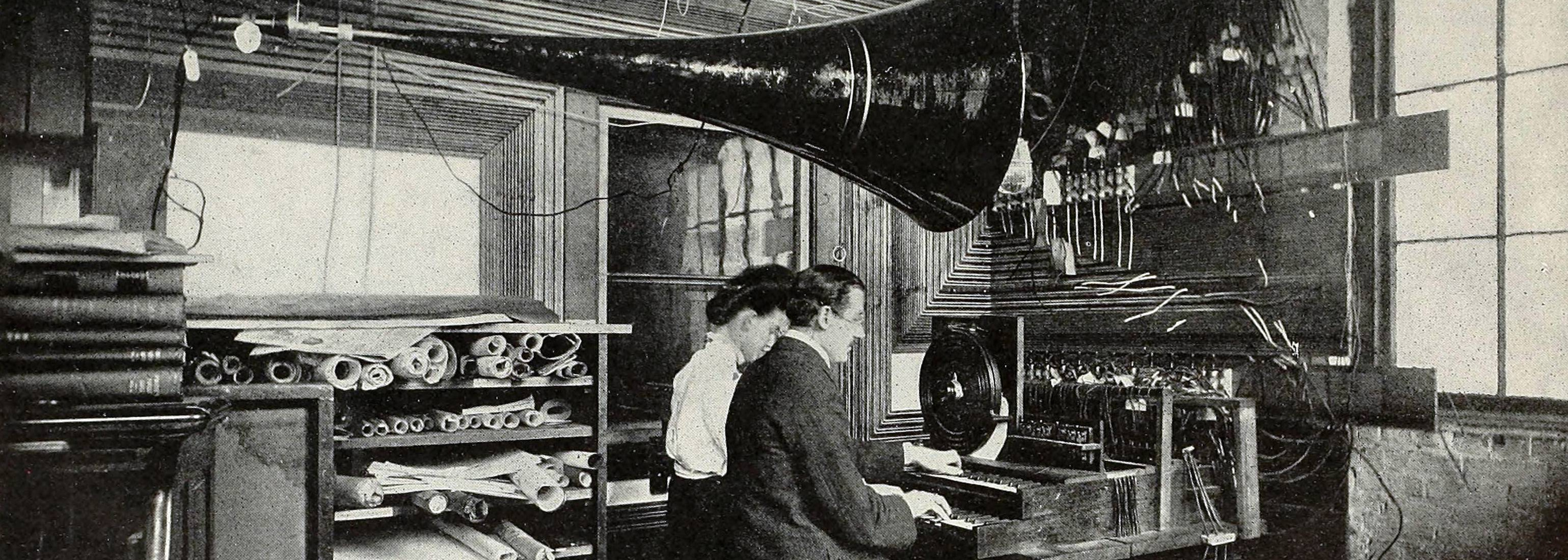
If the armonica made music from glass, the Telharmonium made it from infrastructure. In 1897, American inventor Thaddeus Cahill patented an electrical instrument that could synthesize orchestral colors and send live performances through telephone wires. It was streaming music before radio broadcasting, amplification, or “streaming” existed.
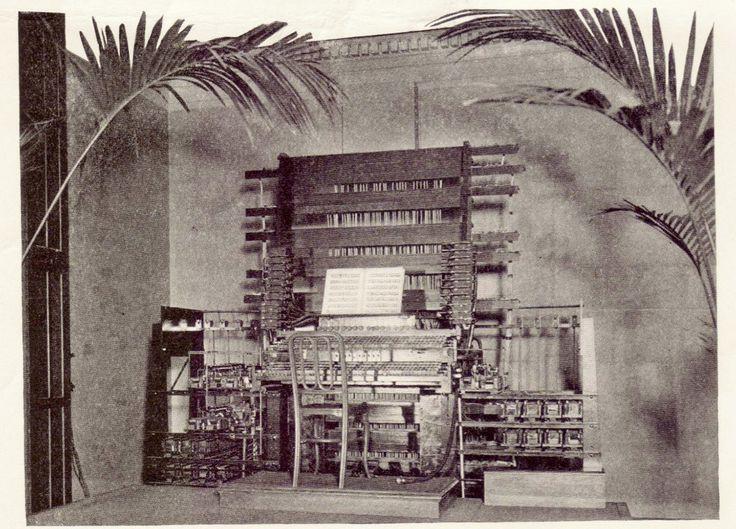
The full-scale machine weighed roughly 200 tons, stretched about 60 feet, and relied on 145 rotating dynamos, shafts, switches, and tone mixers. Performers worked a multi-keyboard console; by combining harmonics, they could approximate familiar timbres. The sound traveled to horn-fitted telephone receivers in hotels, restaurants, and homes. Beneath its polished controls, the Telharmonium resembled a municipal power station dreaming of Bach.
At least two musicians worked the controls, an orchestra compressed into a console while a machine room labored below.
In 1906, the colossus moved from Holyoke, Massachusetts, to New York’s Telharmonic Hall. Diners heard concerts piped into fashionable establishments, a century-early vision of music on demand. But signals bled into phone calls, the machinery was ruinously expensive, and vacuum tubes, radio, and loudspeakers soon offered smaller routes to electronic sound.
No recording is known to survive, giving the Telharmonium an almost mythic status: measurable in tons and circuits, yet impossible to hear. Cahill’s real legacy was the scale of his premise. He imagined music as a utility—generated centrally, transmitted electrically, and available at the turn of a switch.
The Ondes Martenot
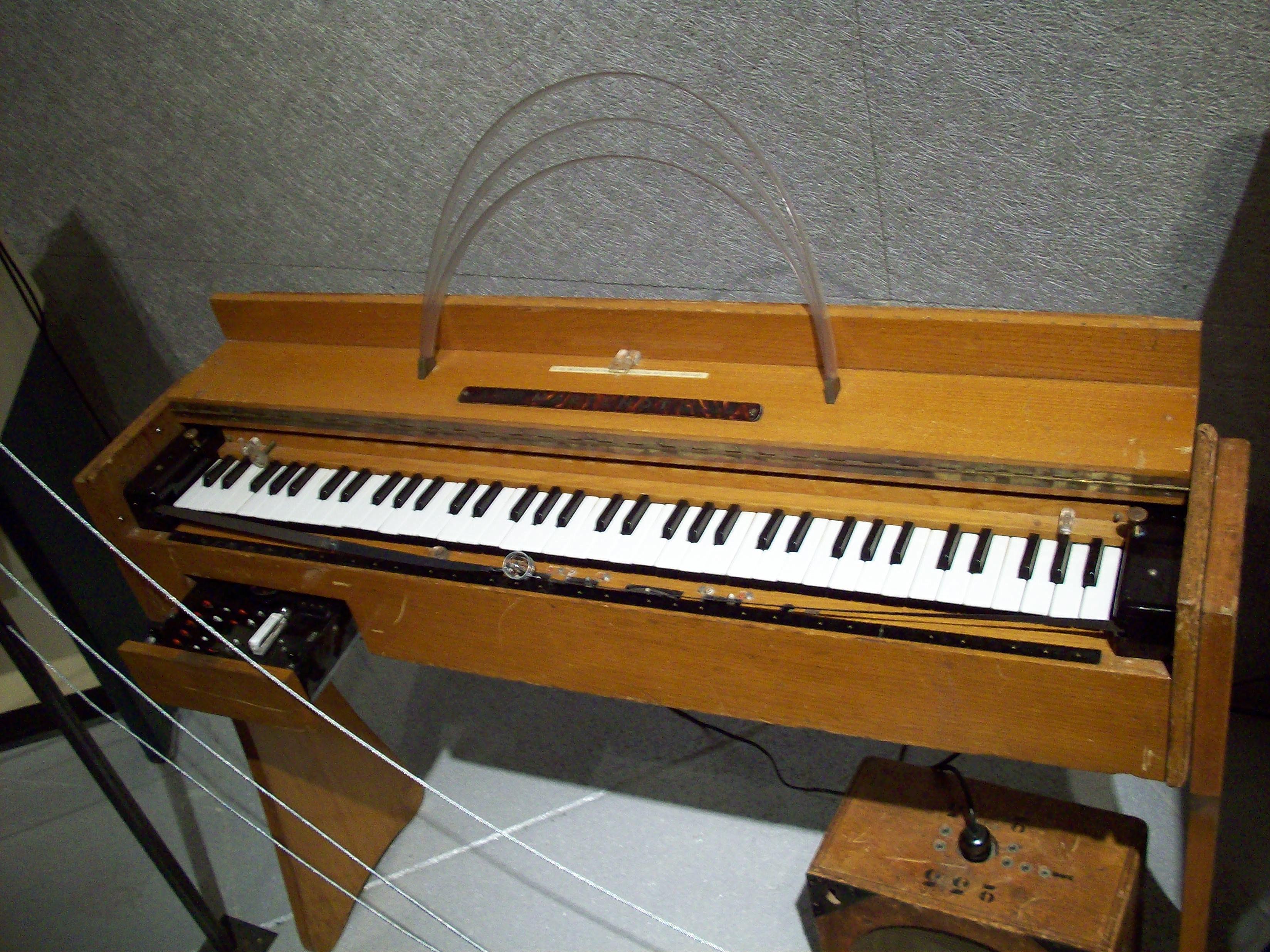
The ondes Martenot took the opposite approach. Where Cahill built a factory, French cellist and wartime radio operator Maurice Martenot pursued intimacy. Fascinated by crossing radio oscillators, he developed an electronic instrument that could phrase like a singer or bowed string. He presented it in Paris in 1928, its voice arriving from the ether with its nerves intact.
Players could use a keyboard, but the defining gesture came from a metal ring pulled along a wire. Sliding it produced seamless glissandos; shifting the keyboard sideways created vibrato. The left hand shaped volume and articulation with a sensitive pressure key. Later resonant “diffusers”—one fitted with a gong, another with sympathetic strings—made a pure electronic tone feel acoustic and alive.
That vulnerability gave the ondes a life beyond novelty. Olivier Messiaen made it blaze through the Turangalîla-Symphonie; filmmakers used its keening voice for wonder and dread. Later, Radiohead and Jonny Greenwood carried its glide into rock. It endures because it solved a problem early electronics often ignored: not simply how to generate a tone, but how to make it breathe.
The Rhythmicon
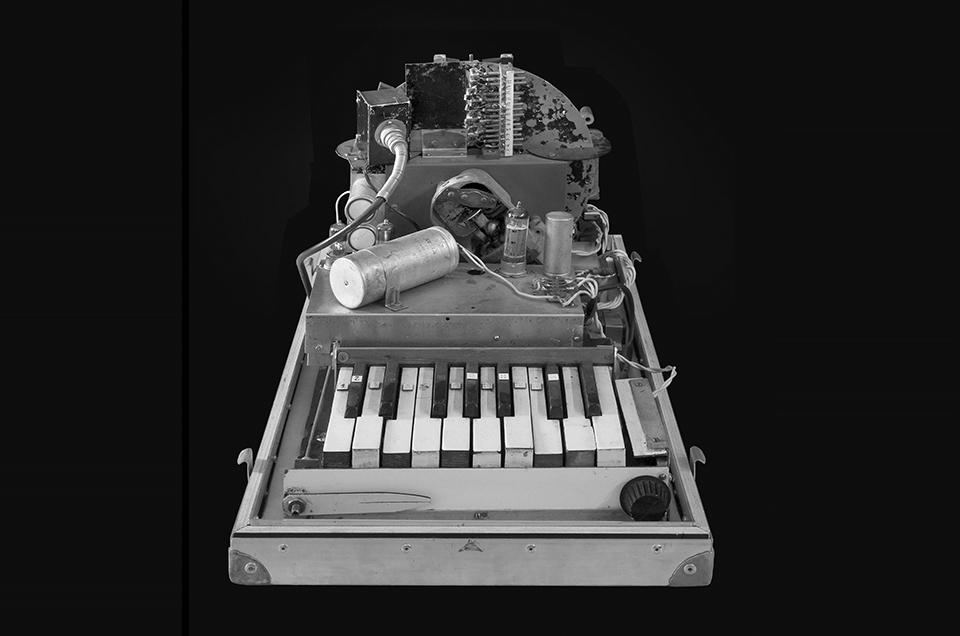
Composer Henry Cowell imagined rhythms human hands could not comfortably play. His music linked the harmonic series to complex pulses: if a fundamental struck once, its overtones might beat twice, three times, four times, and onward. In 1931, he asked Russian inventor Leon Theremin to give the idea a body.
The Rhythmicon was part keyboard, optical apparatus, and prophetic drum machine. Rotating perforated discs interrupted beams of light aimed at photoelectric sensors. Each key produced a pitch and its corresponding pattern; multiple keys released polyrhythms of up to 16 layers, with an insistence no percussion ensemble could easily duplicate.
Its union of pitch and pulse made the harmonic series audible as motion, transforming theory into a flickering mechanical groove.
Instead of changing everything, it proved difficult to use and harder to love. Its reedy thumps sounded like an electrical cabinet developing opinions. Cowell soon lost interest, and only a handful were built.
Still, its failure was fertile. The Rhythmicon treated rhythm as programmable information and let one performer trigger synchronized patterns. It anticipated the drum machine, the sequencer, and the grid-based logic of electronic production. It was not a dead end, but a message sent forward—one music needed decades to decode.
***
These inventions sound unrelated: a spinning glass organ, a networked power plant, a singing radio circuit, a light-driven rhythm box. Yet each collapses the distance between musical imagination and physical experiment. Their makers heard a possibility, then built whatever awkward object was necessary to reach it.
Sometimes an instrument’s real work is to ask a question so compelling that future musicians keep answering it with machines of their own.
Related Articles